The Best Vegan Meal Planning Apps for Hitting Your Macros in 2026
Six vegan meal planning apps tested by plant-based lifters and runners chasing real protein numbers, not just "healthy plant-based meals."
Plant-based macro tracking is its own particular problem. The standard advice (eat more legumes, throw some tofu in) is fine if you're casually plant-curious. It falls apart when you're trying to hit 160g of protein on 2,400 calories without spending 90 minutes a day on prep, or when your protein floor matters more than your enjoyment of yet another lentil bowl.
Most meal planning apps either ignore macros entirely or treat "vegan" as a filter you slap on top of a meat-centric algorithm and call it done.
We ran six apps for six weeks with a clear brief: 2,400 calories, 160g protein, vegan, with a preference for whole-food sources but no objection to tofu, tempeh, seitan, or plant-based protein powder.
The question wasn't "which app has vegan recipes" because they all claim to. The question was which ones actually generate a week of meals that hit those numbers, and which ones leave you 50g of protein short every day no matter how you tweak the inputs.
One app won this clearly. The rest are worth knowing about because they each solve a different piece of the plant-based puzzle, from micronutrient tracking (where vegan diets actually fall short) to adaptive calorie adjustments to whole-food purism. Here's how they ranked, what each does well, and where each falls down.
Vegan Meal Planning Apps - Quick verdict
| # | App | Best for | Price |
|---|---|---|---|
| 1 | Eat This Much | Vegan macro planning, full stop | Free / $5 mo (annual) |
| 2 | Prospre | Macro-targeted plans, lighter UI | Free / $6 mo |
| 3 | Cronometer | Vegan micronutrient tracking (B12, iron, zinc, omega-3) | Free / $9.17 mo |
| 4 | Forks Meal Planner | Whole-food plant-based purists who don't track macros | Free / app + $120 yr planner |
| 5 | MacroFactor | Adaptive macro tracking once you have meals sorted | $6 mo (annual) |
| 6 | Mealime | Cheap and easy vegan recipes for non-trackers | Free / $5.99 mo |
How we tested
Six weeks of real use, identical inputs across all six apps: a 2,400 calorie daily target, 160g protein, 270g carbs, 70g fat, strictly vegan, with a preference for tempeh, tofu, seitan, lentils, chickpeas, quinoa, and oats as protein anchors.
We generated weekly plans every Sunday, did the grocery shopping from the app's list (no manual editing for the first three weeks), and cooked the meals as written rather than swapping things mid-week.
Each week we logged four things: how close the actual macros landed to target (verified by re-entering meals into a separate tracker), whether the plan included sufficient B12 and iron sources, how much of the grocery list ended up unused or wasted, and how often the same protein source repeated across the week. The numbers in each section below come from that log.
1. Eat This Much: The only vegan macro planner that actually works
Verdict
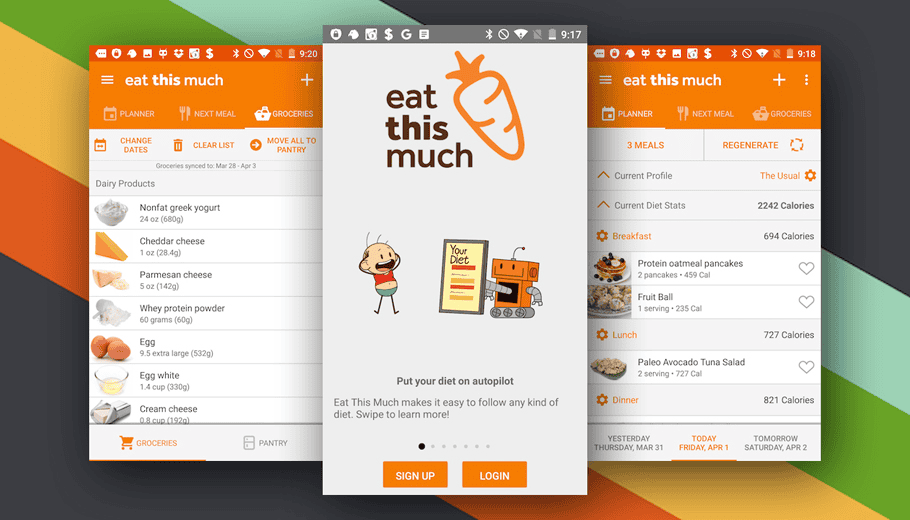
If you're a vegan lifter or endurance athlete, this is the one. Eat This Much is the only app in this group that lets you tell it your calorie target and a minimum protein floor and then builds a vegan week around both. It auto-prioritises high-protein plant foods (tofu, tempeh, seitan, legumes, quinoa) without you having to manually filter recipes, and the dedicated vegan planner has been refined for years rather than bolted on as a feature flag.
Who it's best for
Vegan strength athletes, runners, and anyone working with a coach who has handed them numbers. People who've tried to plan a high-protein vegan week manually and lost their Sunday afternoon to a spreadsheet. Also a strong fit for plant-based athletes who use protein powder strategically rather than as a crutch, because the planner accommodates supplement servings as proper meal components.
What stands out
The protein floor feature is the headline. You set a minimum daily protein target and the algorithm refuses to generate a plan that falls below it. Across six weeks, our daily protein averaged within 5% of the 160g target. The next-closest app (Prospre) came in at 12% short. Every other app in this list missed by 30g or more on most days.
The dedicated vegan planner also handles the parts other apps ignore. It automatically rotates protein sources across the week so you're not eating tofu twice a day for five days, and it surfaces recipes that combine grains and legumes to hit complete amino acid profiles without you having to think about it. The Instacart integration recognised every plant-based SKU we threw at it (tempeh, nutritional yeast, vital wheat gluten) without manual substitutions, which is rare for an app that didn't start as a vegan-specific product.
The pricing also makes it harder to argue against. At $5/month on the annual plan, it's the cheapest macro-targeted planner of the group, and the free tier (one day at a time) is genuinely useful for a try-before-buy. The web version has more depth than the mobile app, which matters if you like to plan on a laptop.
The honest downsides
The recipe pool gets repetitive faster on vegan than on omnivore. Plant-based recipes that genuinely hit high-protein targets are a smaller pool than chicken-based ones, and by week four you'll notice the algorithm cycling through familiar tempeh-and-grain bowls. You can manually add your own recipes (with full nutrition data) to expand the pool, but this is the work the app is supposed to save you, so it stings to do it manually.
Second issue: the interface feels engineering-led rather than designed. The mobile app, in particular, has more friction than it should, and the onboarding doesn't fully bridge the learning curve. You'll be productive within an hour, but the first session is rougher than the polished competitors. Third, the grocery lists run long unless you flag pantry staples. Three half-empty bottles of tamari was our week-two reality.
Pricing
Free tier covers a single daily plan, food tracking, and custom recipes. Premium is $9/month or $60/year ($5/month annual). Weekly plans, automated grocery lists, the Instacart push, and PDF exports require Premium. There's a Pro tier for dietitians and coaches if you fall into that category.
2. Prospre: The closest direct competitor
Verdict
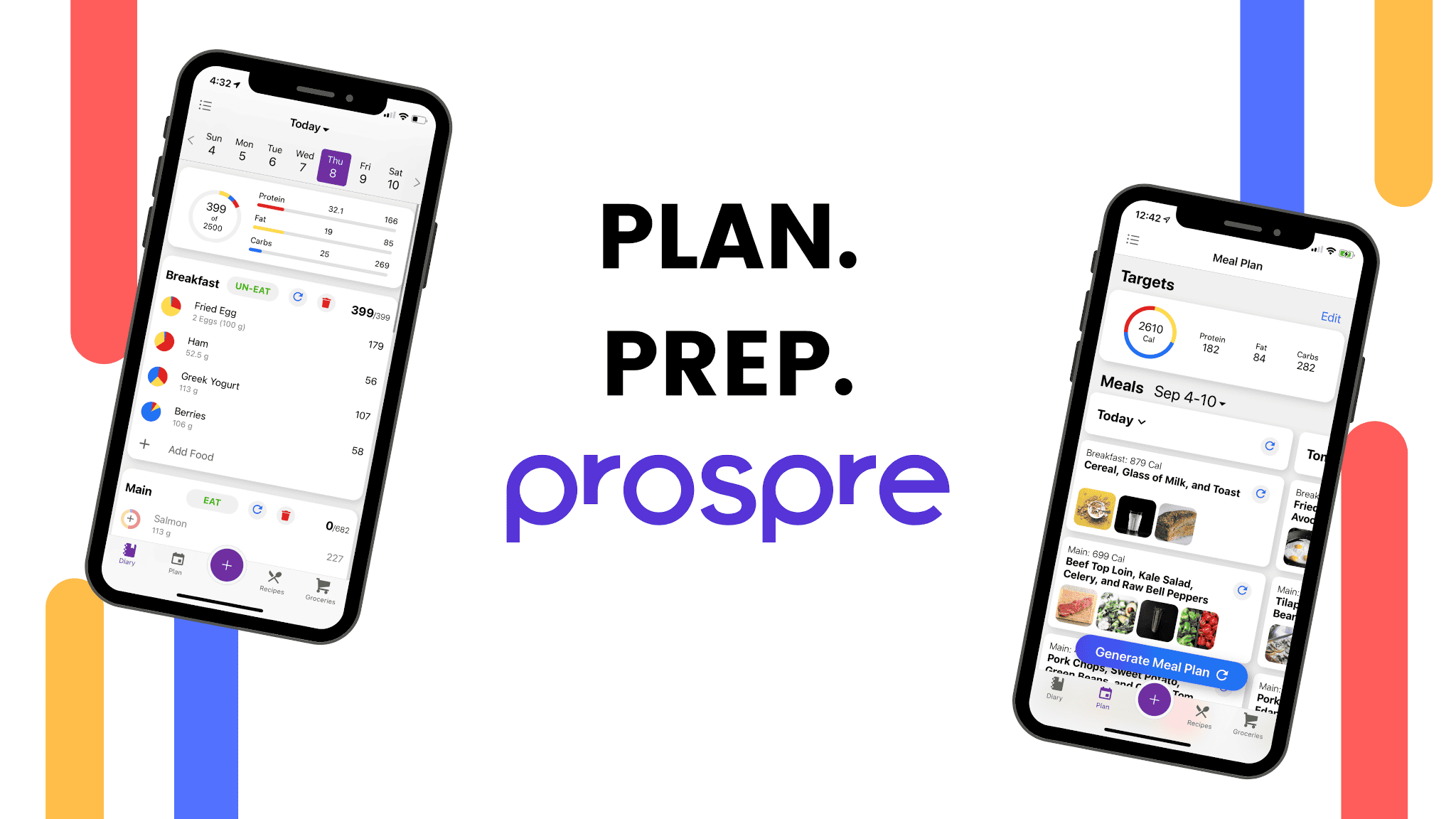
Prospre is the only other app in this group built around macro targets as a primary input rather than a side feature. It's the legitimate alternative to Eat This Much if for some reason the latter doesn't click for you. The vegan support is real, the algorithm is solid, and the mobile UI is a touch more polished. It comes second because the recipe library is shallower and the protein-floor logic is less aggressive.
Who it's best for
Macro-trackers who want a clean mobile experience and don't mind a smaller recipe pool. Also worth a look if you import your own recipes heavily, because Prospre's recipe importer is well-built and lets you mix custom meals with algorithm-generated ones.
What stands out
The macro flexibility is genuinely good. You can set targets by percentage or grams, switch between IIFYM and structured planning, and even carb-cycle on a weekly schedule (high carb on training days, lower on rest days). For a vegan athlete in a recomp phase, this matters. The macro tracking that sits alongside the planner is also tighter than most, which means you can log what you actually ate and compare it to the plan without a separate app.
The Coach Mode is worth flagging if you're working with a remote trainer who uses Prospre on their end. Assigned plans push to your account cleanly, which is one of the few setups in this group that makes a coach-athlete workflow viable without a separate platform.
The honest downsides
The vegan recipe pool is noticeably thinner than Eat This Much's, especially at the high end of protein targets. Our weekly plans hit the same handful of tempeh and seitan recipes by week three. We also ran into days where the algorithm couldn't construct a plan that hit 160g protein from vegan sources without using protein powder twice, which is fine if that's your approach but limiting if you prefer whole foods. The grocery list integration is less developed than Eat This Much's, and we had more SKU mismatches when pushing to Instacart.
Pricing
Free tier with limited customisation. Pro runs around $6/month on an annual plan. The free version generates fixed-macro plans but locks the better customisation behind the paywall.
3. Cronometer: The micronutrient app every vegan should run alongside something else
Verdict
Cronometer isn't a meal planner, so it's not a direct competitor to the first two. It's here because plant-based diets fail people more often on micronutrients (B12, iron, zinc, omega-3, vitamin D) than on macros, and Cronometer is the only tool in this category that tracks those nutrients at a level that lets you actually catch a deficiency before your blood work does.
Who it's best for
Vegans who've been in the lifestyle long enough to know that hitting protein isn't the only number that matters. Athletes who've had iron or B12 dip on a routine blood panel and want to spot it sooner next time. Newly plant-based people who want a clear view of whether their micronutrients are actually covered or whether they're running quietly deficient.
What stands out
The nutrient database is the deepest in the category by a margin. Cronometer tracks 84 nutrients including the ones vegans need to watch most closely. The food database is also verified rather than crowdsourced, which means you're less likely to log something with inaccurate B12 or iron values and get a false sense of security.
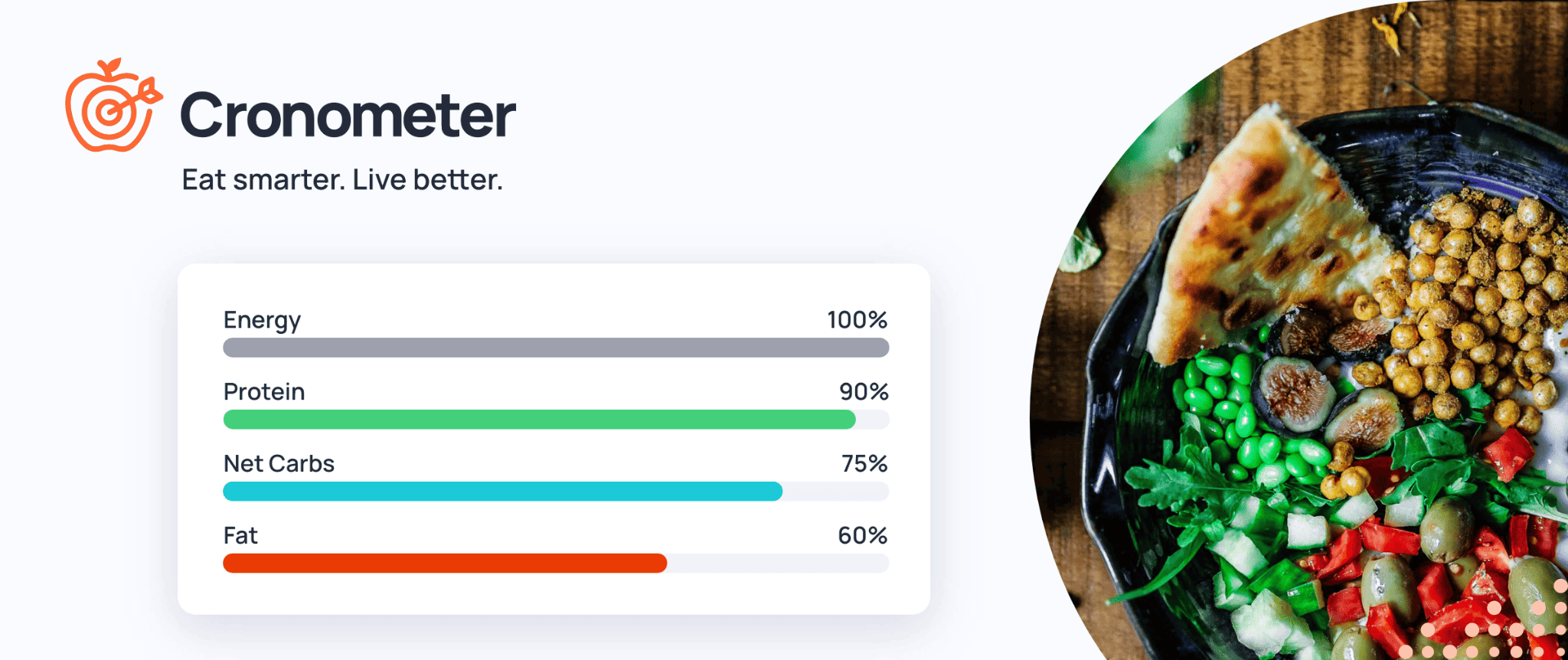
The visual feedback is also useful. Each day shows a coloured bar for every nutrient against your target, so you can see at a glance that you're consistently low on zinc or omega-3 before it becomes a problem. For an experienced vegan athlete, this is the closest you'll get to a dietitian's view of your intake without paying for one.
The honest downsides
Cronometer doesn't generate meal plans. It tracks what you eat after the fact. You'll need to pair it with Eat This Much (for the planning) or do your own meal construction. The free tier is generous for tracking but caps you out of some of the more useful long-term trend views. The mobile app is functional rather than beautiful, and barcode scanning is paywalled in a way that some users find annoying.
Pricing
Free tier is genuinely useful for daily logging. Gold (around $9.17/month or about $110/year) unlocks recipe sharing, custom biometric tracking, and the deeper analytics. For a serious plant-based athlete, the Gold tier is one of the higher-value subscriptions in the nutrition app category.
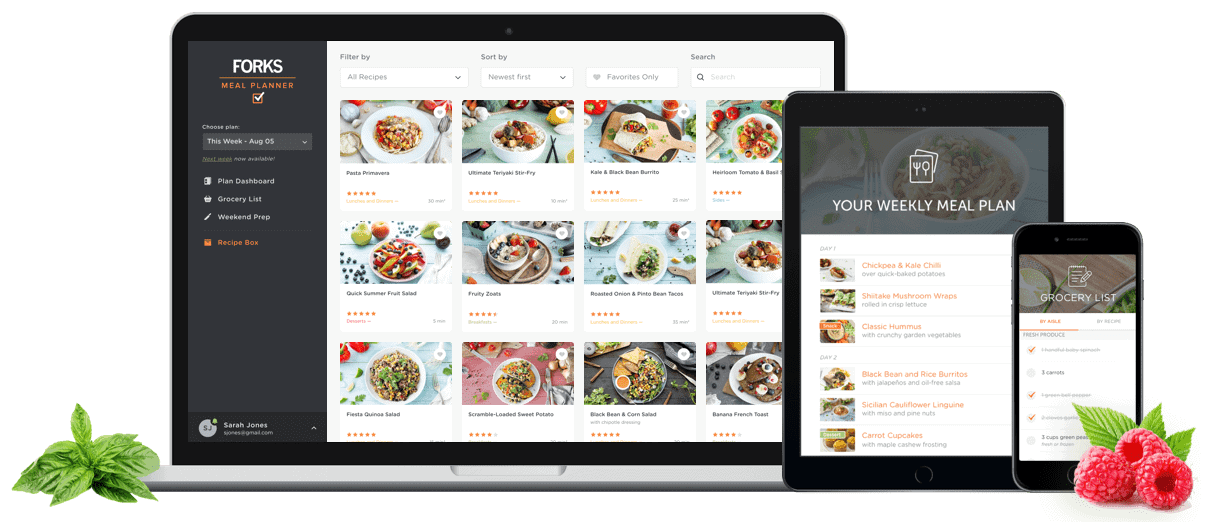
4. Forks Meal Planner: For whole-food purists who don't count macros
Verdict
Built by the team behind the Forks Over Knives documentary, this is the most ideologically consistent vegan meal planner on the list. Every recipe is 100% whole-food plant-based, low in fat, and low in sodium. If that's your eating philosophy, no other app in this group serves you as well. If you track macros aggressively, this is the wrong tool.
Who it's best for
People following a strict WFPB protocol (whole-food plant-based, often capitalised because adherents take it seriously). Doctors who recommend plant-based eating for cardiovascular or metabolic conditions. Vegans who've moved past the macro-counting phase and prioritise food quality over protein totals. Families where one cook is feeding multiple plant-based eaters.
What stands out
The recipe quality is the highest in this group on a per-meal basis. These are restaurant-developed plant-based dishes (1,000+ in the library), with chef-led testing and consistent flavour profiles. Across six weeks of meals, we had exactly one recipe we wouldn't make again, which is a much better hit rate than any other app on this list.
The 35-minute cooking time cap is also a genuine feature. WFPB cooking can spiral into multi-hour prep sessions if you're not careful, and Forks deliberately constrains its recipes to dinners you can pull together on a weeknight. The grocery list is clean and the customisation for gluten, soy, and nut allergies is built in rather than bolted on.
The honest downsides
There are no macro targets and no protein floor. The recipes will tell you their nutrition info, but the planner doesn't optimise around your numbers. If you're trying to hit 160g protein on a WFPB diet without supplementation, you'll need to manually filter for high-legume recipes and you'll probably still come up short. The annual price ($120/year for the full meal planner) is also the highest in this group, which is hard to swallow given the lack of macro features.
Pricing
The free Forks Meal Planner app gives you a basic version. The full paid planner runs $24.99/month, $49.99/quarterly, or $119.99/year, with a 2-week free trial. The free version is enough to evaluate whether the WFPB approach suits you before paying.
5. MacroFactor: The adaptive tracker for serious lifters
Verdict
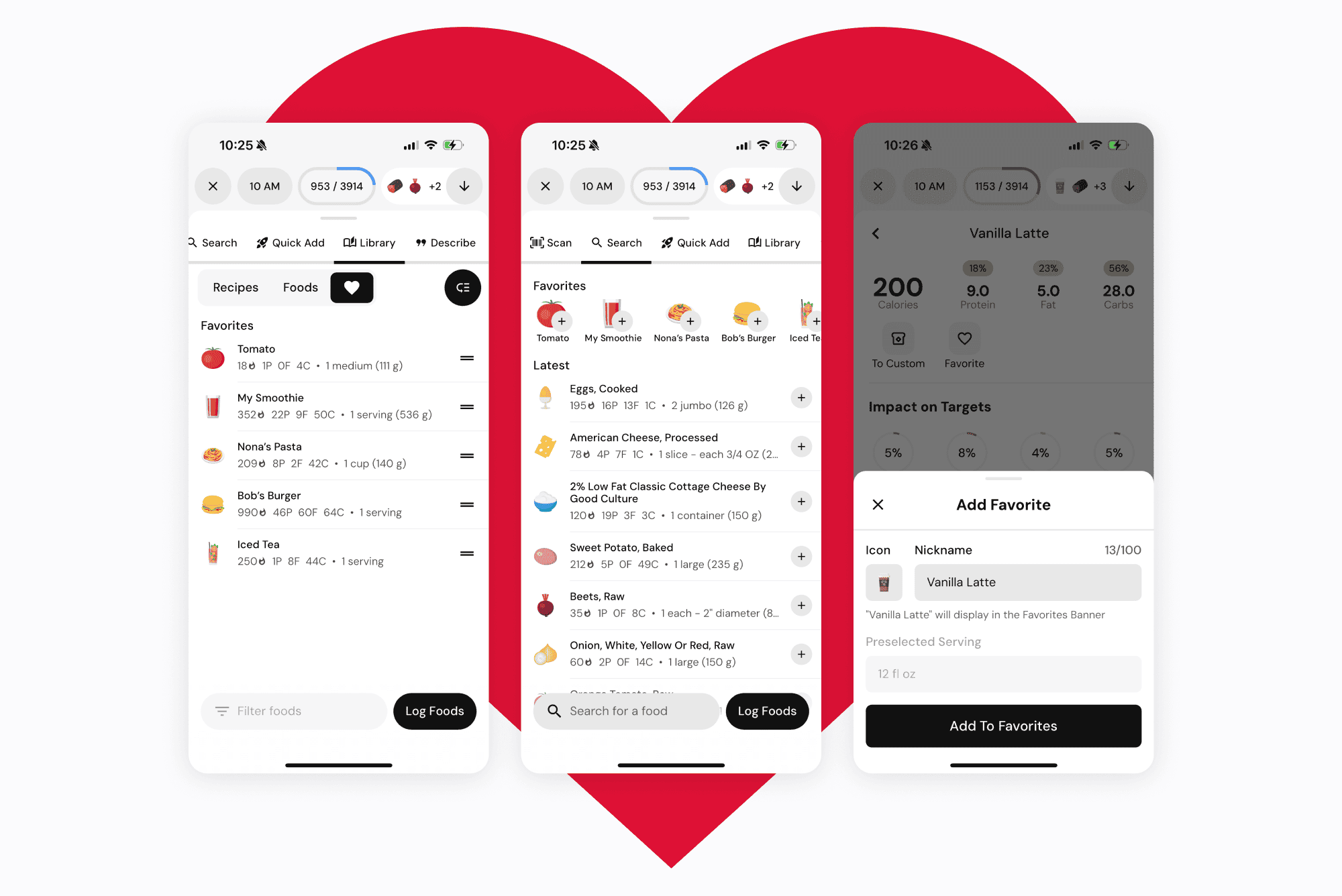
Like Cronometer, MacroFactor is a tracker rather than a planner. It deserves a place on this list because it solves a specific problem that pure planners don't: it adjusts your calorie target weekly based on what's actually happening to your body weight, which matters more for vegan athletes than it gets credit for (plant-based eaters often underestimate calories from oils, nuts, and seeds).
Who it's best for
Vegan lifters in active recomp, cut, or bulk phases who care about the relationship between calories in and body composition out. Anyone who's plateaued on a static calorie target and wants the math to update without them having to recalculate every two weeks. People who already have a stable meal rotation and want better numbers, not better recipes.
What stands out
The adaptive algorithm is the headline feature. You weigh in regularly, log your food, and MacroFactor recalculates your maintenance calories every week based on trend data rather than static formulas. For vegan athletes, this matters because plant-based metabolism doesn't always behave the way generic TDEE calculators predict, and a tracker that learns from your actual data is more useful than one that doesn't.
The food database is solid, the UI is clean, and the barcode scanner works without forcing you into premium upgrades for basic functionality. Vegan food entries are well-represented, including the high-protein products (Beyond, Impossible, Field Roast, vital wheat gluten) that some databases handle poorly.
The honest downsides
No meal planning. You bring your own meals; MacroFactor tells you whether they're hitting your numbers. There's also no free tier, which makes the entry barrier higher than Cronometer's. The subscription is the only pricing path, although the value-per-dollar is high if you actually use the adaptive features.
Pricing
Around $11.99/month or $71.99/year (works out to around $6/month annual). The 7-day free trial doesn't require a credit card up front, which is the right way to handle trials.
6. Mealime: The cheap, friendly option for vegans who don't track
Verdict
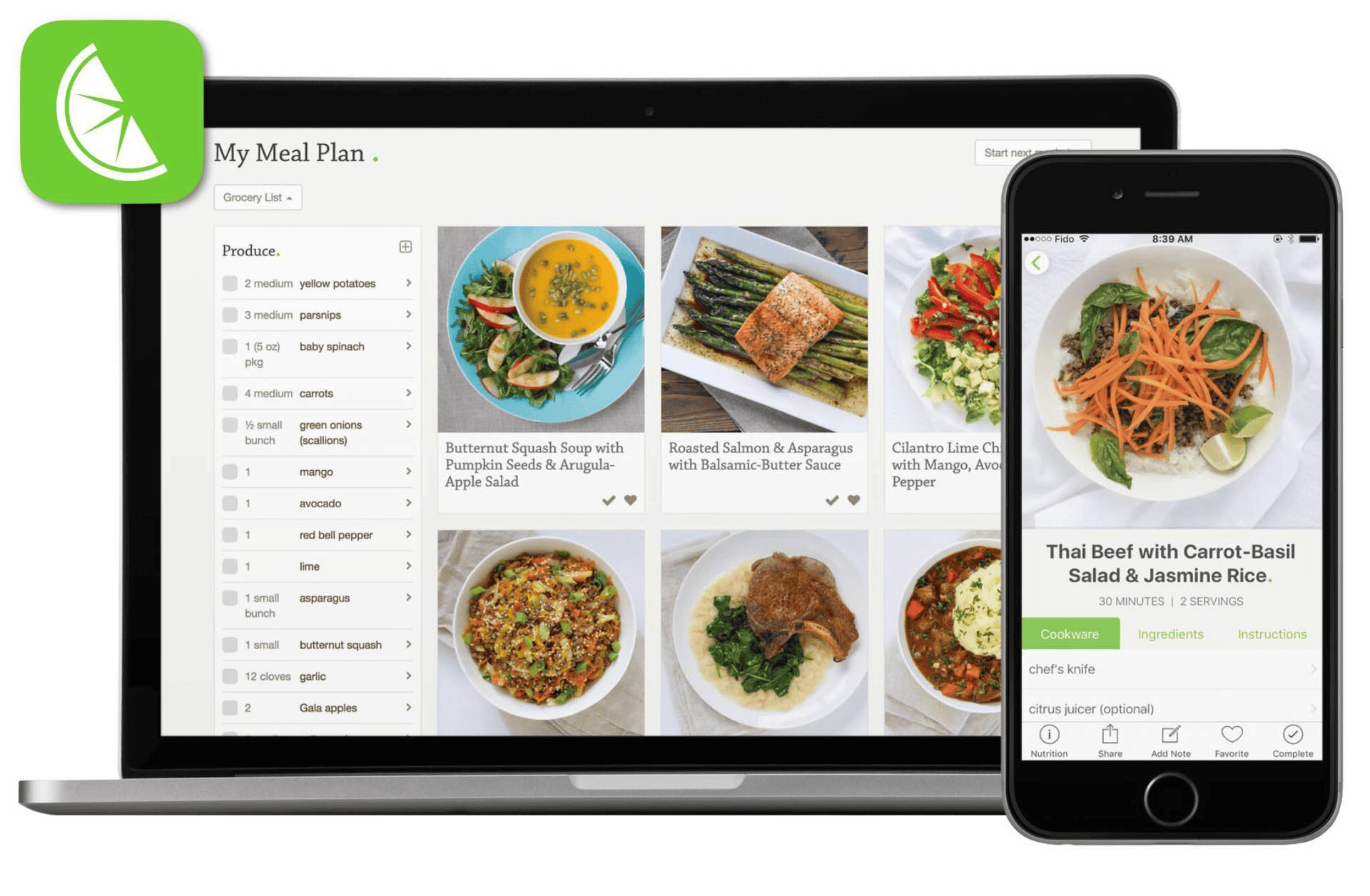
Mealime is excellent at what it does, but what it does isn't macro planning. It's a recipe app with a vegan filter that produces clean weekly plans of 30-minute dinners. For a vegan who doesn't track macros and just wants help answering "what should I cook this week," the free tier alone is enough.
Who it's best for
Newly vegan home cooks, couples cooking for two, and anyone who wants a friction-free weekly plan without setting up macro targets. People who'd benefit more from variety than from precision.
What stands out
The user experience is the best of any app on this list. The hands-free cooking mode (which advances through recipe steps without touching your phone) is the kind of feature you don't appreciate until you've used it. The aisle-sorted grocery list saves real time at the supermarket. The vegan recipe pool is well-curated and the recipes are honest about their cooking times within about 5 minutes either way (better than most apps in this category).
Pricing is the other quiet advantage. The free tier covers weekly plans, grocery lists, and basic personalisation. Pro at $5.99/month is the cheapest paid tier in this comparison, and the 7-day Pro trial doesn't require a credit card. For a vegan who's testing whether meal planning helps them stick to the diet, Mealime removes every excuse not to try.
The honest downsides
No macro targeting at all. You can see nutritional info on Pro, but you can't set a daily protein floor or have the plan generate around your numbers. We tried to reverse-engineer this by manually filtering for high-protein vegan recipes and our plans still landed 50 to 70g of protein short of the 160g target on most days. For a vegan athlete, this is a deal-breaker; for a casual vegan, it doesn't matter.
Pricing
Free tier covers most of what most people need. Mealime Pro is $5.99/month or $49.99/year.
How they actually compare
Macro accuracy (the test we care most about)
Across six weeks of identical inputs (2,400 calories, 160g protein, vegan), here's how the planners landed against the target on average. The two tracker-only apps (Cronometer and MacroFactor) are excluded because they don't generate plans.
| App | Avg. protein vs target | Avg. calories vs target | Plan generation time |
|---|---|---|---|
| Eat This Much | Within 5% | Within 6% | ~45 seconds |
| Prospre | 12% under | Within 8% | ~30 seconds |
| Forks Meal Planner | 38% under | Within 4% | Curated weekly menu (no generation) |
| Mealime | 44% under | 12% under | ~20 seconds |
Vegan-specific features
| Feature | Eat This Much | Prospre | Cronometer | Forks | MacroFactor | Mealime |
|---|---|---|---|---|---|---|
| Vegan macro planning | Yes | Yes | No | No | No | No |
| B12 / iron / zinc tracking | Limited | Limited | Yes | No | Limited | No |
| Whole-food filter | Optional | Optional | N/A | Default | N/A | Optional |
| High-protein plant prioritisation | Yes | Partial | N/A | No | N/A | No |
| Plant milk / alt-protein SKUs | Yes | Yes | Yes | Yes | Yes | Yes |
Pricing
| App | Monthly | Annual | Annual effective monthly | Free tier? |
|---|---|---|---|---|
| Eat This Much | $9.00 | $60.00 | $5.00 | Yes |
| Prospre | Varies | ~$72.00 | ~$6.00 | Yes |
| Cronometer | $13.99 | $109.99 | $9.17 | Yes (generous) |
| Forks Meal Planner | $24.99 | $119.99 | $10.00 | Free app, paid planner |
| MacroFactor | $11.99 | $71.99 | $6.00 | 7-day trial |
| Mealime | $5.99 | $49.99 | $4.17 | Yes (generous) |
What to actually do
If you're a vegan athlete with specific macro targets, start with Eat This Much. Run the free tier for a week against your actual numbers and you'll know whether it works for you within seven days. Pair it with Cronometer for the micronutrient view that no planner gives you, and you have a stack that covers both halves of plant-based nutrition (macros and micros) for under $15 a month combined.
If you're a vegan in active body recomposition, add MacroFactor to the stack. The adaptive calorie adjustments matter more than they seem to, and the cost overlaps cleanly with the others if you cancel Mealime or Forks during cut phases.
If you're a WFPB purist who doesn't track, Forks Meal Planner is the obvious answer and the only ideologically consistent option in this group. Skip the macro tools entirely.
If you're newly vegan and figuring it out, start free with Mealime and see whether meal planning sticks. Once it does, graduate to one of the macro-targeted planners when you're ready to track properly.
Conclusion
After six weeks of running these apps in parallel, the answer for vegan fitness and macro-tracking users is clear. Eat This Much wins because it's the only app in this category that solves the actual problem (hitting specific macro numbers on a vegan diet) rather than approximating it.
The interface isn't perfect and the recipe pool gets repetitive, but the macro accuracy is in a different league from anything else we tested. For most plant-based athletes, the ideal stack is Eat This Much for the weekly plan, Cronometer for the micronutrient view, and a tracker like MacroFactor if you're in an active recomp phase. The combined cost is under $15 a month and it covers everything a serious vegan eater actually needs.
If you're not chasing specific macros, the picture changes. Forks Meal Planner is the right answer for whole-food purists and Mealime is the right answer for casual vegans who want help with weeknight dinners. Both are excellent at what they're built for, and neither is trying to be a macro tool. Match the app to how you actually eat, not to how the marketing makes you feel. Then start with a free tier, give it a real week, and see if the planning actually sticks.